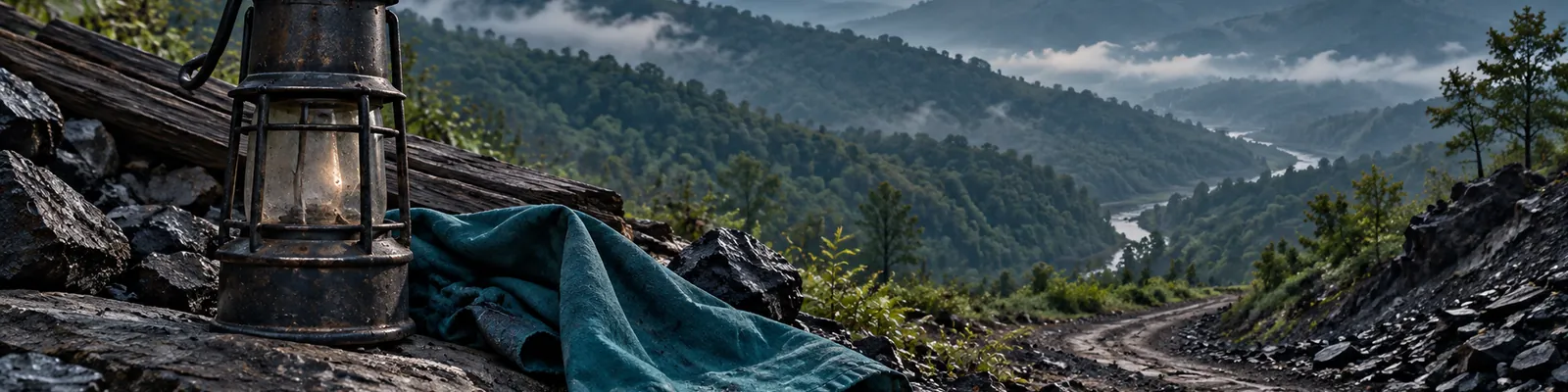
After a decade of strikes, martial law, and killings in the southern West Virginia coal fields, thousands of armed union miners marched on Logan County in 1921, where an elected sheriff paid by coal operators held the line until the president sent federal troops; the state then indicted more than 500 marchers, but key leaders were acquitted and the union collapsed in the region until New Deal labor law changed the rules.
In brief
In the early 1920s, most coal miners in southern West Virginia lived in houses owned by the companies they worked for. In Logan County, the elected sheriff, Don Chafin, was paid by the coal operators' association and used his deputies to keep union organizers out. In neighboring Mingo County, the governor declared martial law in 1921 that banned public meetings and published criticism of officials. After a union police chief, Sid Hatfield, was shot dead on courthouse steps in August 1921, thousands of armed miners marched on Logan County. They fought Chafin's forces for several days until President Harding sent about 2,100 to 2,500 federal troops, and the miners laid down their arms. At least 16 people died. The state then charged more than 500 marchers, with prosecutions led by lawyers working for the coal companies, though juries acquitted the main leaders. The case is not about the ballot itself. It shows what happens when the local institutions meant to hear complaints are paid for by one side.
The record
Background: the mine wars (1912 to 1921)
- April 18, 1912 to 1913: The Paint Creek-Cabin Creek strike began in Kanawha County when operators rejected a wage demand. Strikers increasingly sought recognition of the United Mine Workers of America (UMWA) and an end to "mine guards, blacklisting, and the denial of free speech and assembly." Operators brought in "hundreds" of Baldwin-Felts detectives. Gov. Glasscock imposed martial law three times; more than 200 miners and allies were arrested, including Mother Jones, and "a hundred or more" civilians were court-martialed and sentenced to prison. Gov. Henry D. Hatfield imposed a settlement, pardoned most of those court-martialed, kept the most radical supporters "jailed without charges," and sent the National Guard to close Socialist newspapers in Charleston and Huntington. A 1913 U.S. Senate inquiry followed. (e-WV, Paint Creek-Cabin Creek Strike, Fred A. Barkey) The NPS dates the strike April 1912 to July 1913. (NPS, Introduction to the West Virginia Mine Wars) Miners were "machine-gunned by an armor-plated train, the 'Bull Moose Special,'" and "two labor newspapers were suppressed and their editors jailed." (e-WV, The Mine Wars, David A. Corbin)
- Company towns: "By 1922, nearly 80 percent of West Virginia miners lived in company houses," and families were "totally dependent on the companies for all services." (National Coal Heritage Area, Company Towns) Corbin describes the miners' demands as threatening "company housing, company stores, company schools, company guards, and company churches." (e-WV, The Mine Wars)
- Logan County and Sheriff Don Chafin: Chafin was elected sheriff in 1912, served as county clerk 1916 to 1919 because of a no-consecutive-terms rule, and was elected sheriff again in 1920, serving to 1924. The Logan Coal Operators Association paid him; per the NPS he earned "$2,725 a month" during the Paint Creek-Cabin Creek period and was paid "$37,700 in 1919," when he was county clerk. Operators relied on him and his deputies rather than private detective agencies; he stationed deputies at mines and on trains to watch for organizers. (NPS, Sheriff Don Chafin) e-WV states he "with coal company funding, used many deputies" to keep organizers out. (e-WV, Don Chafin, Kenneth R. Bailey)
- May 29, 1920: In The Nation, journalist Arthur Gleason wrote that "The coal operators maintain on their pay-rolls public officials who preserve order" and that "The operators pay directly to the sheriff $32,700 a year for this immunity from unionization." He reported that the deputies "are deputy sheriffs, appointed by the County Court," and quoted Gov. John J. Cornwell describing the county as "electing its own officers, who are not responsible to me for their official acts." (Reprinted at Hellraisers Journal, Gleason, "Private Ownership of Public Officials," Part I; we could not load an original copy of The Nation.) Note the figure conflict: Gleason says $32,700 a year; the NPS says $37,700 in 1919.
- October 26, 1921 (reported testimony): W. R. Thurmond, president of the Logan Coal Operators Association, told the Senate Committee on Education and Labor that the association paid "$46,630" in 1920 ("4.9 mills on each ton of coal mined") and "$61,517 up to and including September" 1921 into an account for the sheriff, that the system had run "about 8 years," and that deputies received "$175 a month" or "$150." (Transcribed at brandonraykirk.com; the official volume is listed at HathiTrust but its full text was blocked to our fetcher, so these figures are not yet checked against the printed hearing.)
- May 19, 1920, Matewan: Baldwin-Felts detectives evicted union miners near Matewan; Police Chief Sid Hatfield and armed miners confronted them. Seven detectives, two miners, and Mayor C. C. Testerman were killed. On January 26, 1921, Hatfield and 17 others were tried for murder; all were acquitted. (e-WV, Sid Hatfield, Lon Savage) Corbin gives the toll as "three townspeople (including the mayor) and seven detectives." (e-WV, The Mine Wars)
- May 21, 1921: Gov. Ephraim Morgan proclaimed martial law in Mingo County. After the state supreme court ruled that only the military could enforce it, Morgan reissued the proclamation with "enrolled militia" companies. Martial law was not lifted until September 1922. (e-WV, Thomas Davis, Merle T. Cole) Under it, residents could not "assemble publicly, hold any demonstrations, publish materials critical of the authorities." On June 14, 1921, over 70 vigilantes and officers raided the Lick Creek tent colony of evicted strikers; one striker was killed and 47 were arrested. (West Virginia Mine Wars Museum, Lick Creek)
- August 1, 1921: Sid Hatfield and Ed Chambers, both unarmed and with their wives, were shot dead by Baldwin-Felts detectives on the McDowell County courthouse steps in Welch, where Hatfield had been ordered to stand trial on charges of leading a raid on Mohawk. Detective C. E. Lively was acquitted of murder in December 1922. (e-WV, C. E. Lively, Lon Savage; e-WV, Sid Hatfield)
The march and battle (August to September 1921)
- August 7, 1921: 5,000 miners met in Charleston to present demands to Gov. Morgan. The marchers "intended to overthrow the governor's proclamation of martial law in Mingo County" and to "wipe out the anti-union mine guard and deputy sheriff systems in Logan and Mingo counties." Bill Blizzard served as field commander. (e-WV, The 1921 Miners' March, David A. Corbin)
- Late August 1921: Miners gathered at Marmet and marched toward Logan and Mingo. (NPS, Introduction) On August 28, marchers learned that Chafin's deputies had killed five pro-union men. (e-WV, 1921 Miners' March)
- August 30, 1921: Harding's proclamation ordered all persons engaged in "unlawful and insurrectionary proceedings" to "disperse and retire peaceably to their respective abodes on or before 12 o'clock noon of the first day of September, 1921." (Morning Oregonian, Aug. 31, 1921, p. 1, OCR via Oregon Historic Newspapers)
- August 30 to 31: Preacher-miner John Wilburn led a group up the mountain (NPS: "70 miners"; e-WV: 50 to 75). In the clash with Deputy John Gore's party, three Logan men and one of Wilburn's men, a Black miner, were killed. (NPS, The Battle of Blair Mountain; e-WV, John Wilburn Trial, Lon Savage)
- Private aircraft: Chafin's side flew planes over the marchers and dropped "two nausea-inducing gas bombs" and two bombs of gunpowder, nuts, and bolts. (NPS, Battle) The NPS Chafin article says three biplanes were supplied by the operators. (NPS, Chafin)
- September 1 to 3: Harding placed the area under martial law and ordered federal troops and bombers into the state. (e-WV, 1921 Miners' March) A WVU Libraries exhibit totals the federal force at 2,106 under Brig. Gen. Henry Bandholtz, with units from Ohio, Kentucky, and New Jersey and a Chemical Warfare detachment arriving September 2 to 3. (WVU, Troops on the Move)
- Army aircraft: Three Martin bombers and eleven DH-4Bs reached Kanawha City; per the Appalachian Forest National Heritage Area, "None of the federal aircraft participated in the bombing runs." Bomber No. 5 crashed near Drennen, Nicholas County, on September 3, 1921, killing four crew. (AFNHA, Loss of Bomber No. 5, Robert C. Johnson)
- September 3 to 8: The miners agreed to lay down their arms rather than fight U.S. soldiers. (e-WV, 1921 Miners' March) Troops disarmed and sent home "nearly fifty-four hundred miners" between September 4 and 8. (WVU, The Miners Lay Down Arms) The NPS says fighting "officially ended on September 4, 1921." (NPS, Battle)
Disputed numbers
| Item | Estimate | Who says it |
|---|---|---|
| Marchers | "nearly 9,000" | NPS, Chafin |
| Marchers | about 10,000 | Smithsonian, 2021; Origins (OSU); TCLF |
| Marchers | "over 15,000" | Corbin, e-WV 1921 Miners' March |
| Marchers | "perhaps 20,000" | Corbin, e-WV The Mine Wars |
| Marchers disarmed | "nearly fifty-four hundred" | WVU exhibit |
| Defenders | 3,000 | NPS, Chafin; TCLF |
| Defenders | "more than 5,000" guards, deputies, and state police | Corbin, e-WV |
| Federal troops | 2,106 | WVU exhibit |
| Federal troops | 2,500 | Corbin, e-WV; Origins |
| Deaths in the battle | "at least 16 confirmed deaths"; true total unknown | New York Times, Sept. 7, 2021 (reprinted by UMWA) |
| Deaths in the battle | "about 16 miners" (unattributed estimates) | Smithsonian |
| Deaths in the battle | "The death toll remains unknown." | Origins (OSU) |
The safest statement: thousands of armed miners (the best-documented hard number is about 5,400 disarmed) faced roughly 3,000 or more defenders and then about 2,100 to 2,500 federal troops; at least 16 people died in the fighting, and the full toll is unknown. Add four Army airmen killed in a crash and the men killed in the August 28 Sharples raid.
Aftermath
- 1921 to 1922: The Senate Committee on Education and Labor held hearings on the West Virginia coal fields under S. Res. 80, July 14 to October 29, 1921 (2 volumes). (HathiTrust catalog) On January 27, 1922, Chairman William S. Kenyon presented an individual report, signed by no other member, that held both operators and miners responsible, said operators "will not employ men belonging to the unions" while "the United Mine Workers are determined to unionize these fields," and proposed a federal industrial tribunal. (Evening Star report, reprinted at Hellraisers Journal; original not loaded.)
- 1922 trials: The state indicted over 500 marchers for murder, conspiracy, accessory to murder, and treason against the state; treason charges went to 20 District 17 members. Trials were moved to the Jefferson County Courthouse in Charles Town, where John Brown was tried in 1859. The county prosecutor recused himself, calling the trials "a waste of scarce resources and mean-spirited vendettas," and private attorneys prosecuted; coal operators later billed the state $125,000 in legal fees. Blizzard was acquitted of treason on May 25, 1922, after a trial of over four weeks. (NPS, Jefferson County Courthouse Treason Trials) e-WV says Blizzard was found not guilty of treason and murder. (e-WV, Bill Blizzard, C. Belmont Keeney) Corbin reports Keeney, Blizzard, and Mooney acquitted, "mostly for lack of evidence"; Walter Allen convicted of treason, who jumped bail; and Wilburn convicted of murder. (e-WV, 1921 Miners' March) On Wilburn's sentence the e-WV entries differ: Corbin says ten years and a 1925 pardon by Morgan; Savage says eleven years for Wilburn and his son, cut to five by Morgan, and a pardon by Gov. Howard Gore after three years served. (e-WV, John Wilburn Trial)
- 1920s decline: After the trials, national UMWA leaders cut off funding to District 17. (NPS, Treason Trials) The UMWA "collapsed in southern West Virginia." (e-WV, The Mine Wars) By decade's end it "dwindled to fewer than 1,000 dues-paying members in West Virginia." (e-WV, John L. Lewis, Kenneth R. Bailey) Smithsonian gives about 50,000 around 1920 and 600 in 1929, without naming a source. (Smithsonian)
- 1933 to 1935: The National Industrial Recovery Act, signed June 16, 1933, required industry codes to guarantee workers the right to organize and bargain collectively free of employer interference (Section 7(a)); the Supreme Court struck down the code system in Schechter (May 1935). (National Archives, NIRA) The NIRA produced "huge growth" in the UMWA. (e-WV, John L. Lewis) The Wagner Act, signed July 5, 1935, gave employees "the right, under Section 7, to form and join unions" and required bargaining with majority-chosen unions. (NLRB, 1935 Passage of the Wagner Act)
- National Register dispute: The battlefield (about 1,600 acres) was listed March 30, 2009. After a law firm for coal companies submitted more objections, the state historic preservation office found a majority of owners objected, and the Keeper delisted it. (Sierra Club v. Jewell, D.C. Cir. 2014) The delisting date was December 30, 2009. (West Virginia Highlands Conservancy, Cindy Rank) On August 26, 2014, the D.C. Circuit held that preservation groups had standing (Judge Sentelle dissenting). (D.C. Cir. opinion) On April 11, 2016, Judge Reggie B. Walton vacated the delisting and remanded to the Keeper. (TCLF; WVHC) The Keeper signed the relisting decision June 27, 2018; Keeper Joy Beasley called the removal "erroneous" and said most owners had not objected. (WVHC; WMKY/AP, June 30, 2018) Alpha Natural Resources and Arch Coal held three surface-mining permits overlapping the battlefield. (Appalachian Voices, 2018)
What this case shows
- Local law enforcement was financed by one side of the labor dispute. Multiple sources agree the Logan County sheriff was paid by the coal operators' association: the NPS ($2,725 a month; $37,700 in 1919), Gleason in 1920 ($32,700 a year), and the association president's reported Senate testimony ($46,630 in 1920). An elected office and its deputies functioned as a private anti-union force. (NPS; Gleason; e-WV)
- Speech, press, and assembly were repeatedly suspended for miners. Paint Creek strikers sought an end to "the denial of free speech and assembly"; civilians were court-martialed instead of tried in civil courts; labor newspapers were shut. In Mingo in 1921, martial law barred public assembly and publishing criticism of authorities for over a year. These are the core tools of political voice. (e-WV, Paint Creek; Mine Wars Museum; e-WV, Davis)
- Workers lived inside company-controlled communities. Nearly 80 percent of miners lived in company houses in 1922 and depended on the company for "all services"; striking union members were evicted from those homes. Dependence on one employer for housing and goods limited the room for independent political action. (Coal Heritage; Mine Wars Museum)
- The march's stated goals were political and legal, not only economic. Marchers aimed to end Mingo martial law and the deputy and mine guard systems, after first bringing demands to the governor. The killing of Hatfield, on his way to court, with no conviction for his killers, was a breaking point. (e-WV, March; e-WV, Lively)
- The justice system after the battle tilted toward the operators, but juries pushed back. Over 500 were indicted, private lawyers paid by operators prosecuted after the public prosecutor withdrew, and operators billed the state $125,000. Yet juries acquitted the main leaders. (NPS, Treason Trials)
- Durable change came through national law. Union membership in West Virginia fell below 1,000 in the 1920s and revived only after federal law protected the right to organize (1933, 1935). The fight over memory continued: the battlefield's 2009 delisting turned on coal-company objections and took nine years and federal court rulings to reverse. (e-WV, Lewis; NARA; NLRB; D.C. Cir.)
The strongest objections, and our answers
- Objection: This is a labor case, not a voting case. Mitigation: Correct, and we say so. We found no high-quality source showing miners were denied the ballot in Logan County. The tie is to political voice more broadly: who controlled law enforcement, assembly, the press, and courts. Chafin himself won elections. The link to voting is indirect.
- Objection: The miners were an armed insurrection; using troops was legitimate. Mitigation: The marchers did take up arms and men on both sides were killed. Our point is not that the march was lawful but that miners had found peaceful channels (petitioning the governor, civil courts, a free press) blocked or suspended before they armed. Corbin, Kenyon, and the NPS all describe violence on both sides.
- Objection: The courts worked; juries acquitted the leaders, and Matewan defendants were acquitted too. Mitigation: True and important. Local and out-of-county juries repeatedly sided with miners. That cuts against a claim of fully captured courts. But the killers of Hatfield and Chambers were also acquitted, Wilburn served prison time, and the prosecutions were funded and staffed by operators.
- Objection: Numbers are inflated in popular retellings. Mitigation: Agreed. March estimates run from about 5,400 (disarmed) to 20,000, and deaths from "at least 16" to unknown. Even Corbin's two e-WV entries differ (15,000 vs. 20,000). We rest no argument on the largest figures.
- Objection: The federal government ended the fight on the operators' side. Mitigation: Partly. Troops did end the march, and Mitchell was prepared to use gas. But per AFNHA the federal planes dropped no bombs, the miners surrendered rather than fight soldiers, and federal law (NIRA, Wagner) later did more for miners' organizing rights than state authorities had.
- Objection: Operator payments to the sheriff may have been for legitimate policing. Mitigation: Thurmond reportedly testified the deputies did not guard company property. But the NPS, e-WV, and Gleason all describe the payments' purpose as keeping unions out. We present the payments as fact and the purpose as the historians' consensus.
- Objection: The National Register dispute is environmental politics, not history. Mitigation: We report only the court record and dates; the dispute shows how ownership of land shaped public memory of the event, not any present-day policy position.
Open questions: what would change our minds
- The printed 1921 Senate hearings (HathiTrust, blocked to us) should be checked for Thurmond's exact figures and page numbers before quoting them as testimony.
- Gleason's 1920 Nation article should be checked in an original copy; the $32,700 vs. $37,700 conflict needs resolving.
- We found no high-quality source on election practices in Logan County under Chafin (vote counts, registration, intimidation). Evidence of election control would strengthen the voting link; its absence keeps the tie indirect. A blog page notes Thurmond also chaired a county party committee in 1921; we did not verify this.
- A sourced death count for both sides (for example, from death certificates or a published study) would narrow the casualty range.
- Chafin's birth year differs (NPS 1881, e-WV 1887); not material, but should be settled before publishing a profile.
- The Kenyon report text should be read in the original Senate document rather than a newspaper reprint.
Sources
| Title | Publisher | Supports |
|---|---|---|
| The Battle of Blair Mountain | National Park Service | Wilburn party, private bombs, end date, NRHP mention |
| Introduction to the West Virginia Mine Wars | National Park Service | Paint Creek dates, march, 500+ indictments, company towns |
| Sheriff Don Chafin | National Park Service | Operator payments, deputies on trains, 9,000 marchers, 3,000 defenders, biplanes |
| Jefferson County Courthouse Treason Trials | National Park Service | Indictments, venue, prosecutor recusal, $125,000, Blizzard acquittal May 25 |
| The 1921 Miners' March (David A. Corbin) | e-WV, WV Humanities Council | Goals, 15,000 marchers, troops, planes, trial outcomes |
| The Mine Wars (David A. Corbin) | e-WV | Paint Creek, Matewan, Hatfield/Chambers, 20,000, union collapse |
| Paint Creek-Cabin Creek Strike (Fred A. Barkey) | e-WV | Demands, martial law, court-martials, newspapers closed |
| Don Chafin (Kenneth R. Bailey) | e-WV | Coal company funding of deputies |
| Sid Hatfield (Lon Savage) | e-WV | Matewan deaths, Jan. 1921 acquittal, Aug. 1 killing |
| C. E. Lively (Lon Savage) | e-WV | Reason for Welch trip, killers, Lively acquittal |
| John Wilburn Trial (Lon Savage) | e-WV | Clash deaths, sentences, pardons |
| Bill Blizzard (C. Belmont Keeney) | e-WV | Blizzard role and acquittal |
| Thomas Davis (Merle T. Cole) | e-WV | Mingo martial law dates |
| John L. Lewis (Kenneth R. Bailey) | e-WV | Under 1,000 members; NIRA growth |
| June 14, 1921: Raid of the Lick Creek Tent Colony | West Virginia Mine Wars Museum | Martial law restrictions, raid, 47 arrests |
| Company Towns | National Coal Heritage Area Commission | Nearly 80% in company houses |
| Morning Oregonian, Aug. 31, 1921, p. 1 (OCR) | Oregon Historic Newspapers / Univ. of Oregon | Harding proclamation text |
| Troops on the Move; The Miners Lay Down Arms | WVU Libraries Omeka exhibit | 2,106 troops; 5,400 disarmed (companion page) |
| Loss of Bomber No. 5 (Robert C. Johnson) | Appalachian Forest National Heritage Area | Army aircraft, no federal bombing, crash |
| West Virginia coal fields: hearings (S. Res. 80) | HathiTrust catalog | Hearing dates and existence |
| Private Ownership of Public Officials (Arthur Gleason, The Nation, 1920) | Reprinted by Hellraisers Journal | Operator payments to sheriff; Cornwell quote |
| Kenyon individual report (Evening Star, Jan. 27, 1922) | Reprinted by Hellraisers Journal | Kenyon report date and findings |
| Thurmond testimony transcription | brandonraykirk.com | Reported payment figures (unverified against print) |
| Sierra Club v. Jewell, No. 12-5383 (D.C. Cir. 2014) | U.S. Court of Appeals, D.C. Circuit | Listing date, objection process, standing holding |
| Blair Mountain Battlefield (Cindy Rank) | West Virginia Highlands Conservancy | Delisting Dec. 30, 2009; 2016 ruling; June 27, 2018 |
| Blair Mountain Battlefield | The Cultural Landscape Foundation | Judge Walton ruling; relisting; 10,000 / 3,000 |
| Blair Mountain Returns to National Register | WMKY (AP), June 30, 2018 | Beasley quotes |
| Blair Mountain returns to National Register | Appalachian Voices | Permits overlapping battlefield |
| National Industrial Recovery Act | National Archives | Section 7(a), Schechter |
| 1935 Passage of the Wagner Act | NLRB | Wagner Act date and rights |
| What Made the Battle of Blair Mountain... (Lonnie Lee Hood) | Smithsonian Magazine, 2021 | 10,000; about 16 deaths; membership figures (unsourced) |
| A Century Ago, Miners Fought... (Campbell Robertson, NYT) | Reprinted by UMWA | "at least 16 confirmed deaths" |
| The Battle of Blair Mountain (Neil Humphrey) | Origins, Ohio State University | 10,000; 3,000; toll unknown |
Found an error or a better source? We keep every correction on the record with its date and reason. Nothing here is quietly rewritten.